Wednesday, November 16, 2011
Medical Schools in Malaysia: 35 and counting
There are now 35 medical schools in Malaysia and some of them have two programmes per year:
1) University Malaya (UM)
2) Universiti Kebangsaa n Malaysia (UKM)
3) Universiti Sains Malaysia (USM)
4) Universiti Putra Malaysia (UPM)
5) UiTM
6) University Sains Islam Malaysia (USIM)
7) Universiti Darul Iman
8) Universiti Sarawak Malaysia (UNIMAS)
9) Universiti Sabah
10) Universiti Malaysia Kelantan
11) Melaka-Manipal Medical College: 2 programmes
12) Monash University Malaysia
13) International Medical University (IMU)
14) SEGI University College
15) Allianze College of Medical Sciences (ACMS): 2 programmes
16) Penang Medical College (PMC)
17) Mahsa University College
18) Masterskills University College of Health Sciences
19) Royal College of Medicine Perak (UNIKL) : 2 programmes
20) Universiti Islam Antarabangsa (UIA)
21) Newcastle University Malaysia
22) Perdana University : Graduate Medical School
23) Perdana University : RCSI
24) Inssaniah University College
25) Quest International University Perak ( starting soon)
26) RCSI Trengganu ( starting soon)
27) KPJ University College (starting soon)
28) Cyberjaya School of Medical Sciences
29) AIMST
30) Taylor’s University College
31) Management and Science University (MSU)
32) University Tunku Abdul Rahman (UTAR)
33) University College Sedaya International (UCSI)
34) Lincoln University College( started 2011)
35) University Pertahanan Nasional Malaysia ( started 2009)
.
Pagalvan's Future Doctors: Malaysian Healthcare System for Dummies
.
The Standards of Medical Education in Malaysia
The Standards of Medical Education in Malaysia and Its AcceptabilityDr. David KL Quek,MBBS, MRCP, FRCP, FAMM, FCCP, FASCC, FAPSC, FNHAM, FACC, FAFPM (Hon.)Immediate Past President, Malaysian Medical Association (MMA)(Lecture presented at the Medico-Legal Society of Malaysia Conference, Royale Chulan Hotel, Kuala Lumpur, on 16 November 2011)
An insightful lecture by a previous President of the Malaysia Medical Association posted on his blog MyHealthMatters,
The standards of our medical education are falling. This is an unacceptable trend, which should not be allowed to continue. If we do not take drastic remedial steps and actions to stall this slide, we might see a deteriorating climate of healthcare services in the country, with possible lowering of our medical professionalism and our clinical expertise as a whole. We might be reduced to the standards of some of the third world countries’ health services, where excellence is a rarity than a norm.
We could see a decline in our competitiveness, our competence and a deteriorating belief in ourselves, as a developed nation—perhaps to be bogged down once again in a quicksand trap of mediocrity and ‘tidak apa’ lackadaisical mindset. We might soon be having so many poor quality doctors and medical graduates who may be unemployed, even unemployable, and not trusted to be good enough to be our healthcare providers!
Potentially, there could be greater chances of endangering of patient safety and lives, for medical mishaps and errors, and greater risks for medico-legal challenges. Finally, the quality of our health service could deteriorate so much that our routine services would be called into question, with possibly the skeptical questioning of the integrity and foundations of our health service. Instead of trust in our health service, we could see the reversed medical tourism of more and more of our own citizens to other neighbouring countries with perceived higher standards of care and excellence of service!
Thursday, March 3, 2011
Health Information Technology and Clinical Practice
March 2011 Contents
Health Information Technology and Clinical Practice
From the Editor
Anthony C. Rudine
Full Text | PDF
Virtual Mentor. 2011; 13:141-143.
Educating for Professionalism
Clinical Cases
Commentary by Deborah D. Nelson
Full Text | PDF
Virtual Mentor. 2011; 13:144-147.
Commentary by Stephen T. Miller and Rexann G. Pickering
Full Text | PDF
Virtual Mentor. 2011; 13:148-151.
Commentary by Nabeel Farooqui
Full Text | PDF
Virtual Mentor. 2011; 13:152-155.
Medical Education
James B. Lewis Jr. and Kathryn Ryder
Full Text | PDF
Virtual Mentor. 2011; 13:156-160.
The Code Says
Full Text | PDF
Virtual Mentor. 2011; 13:161-162.
Journal Discussion
Timothy Hotze
Full Text | PDF
Virtual Mentor. 2011; 13:163-166.
Angeline Wang
Full Text | PDF
Virtual Mentor. 2011; 13:167-169.
Clinical Pearl
Anthony C. Rudine and Jennifer P. Rudine
Full Text | PDF
Virtual Mentor. 2011; 13:170-171.
Law, Policy, and Society
Health Law
Policy Forum
Stephen T. Miller, and Alastair MacGregor
Full Text | PDF
Virtual Mentor. 2011; 13:176-180.
Medicine and Society
James E. Bailey
Full Text | PDF
Virtual Mentor. 2011; 13:181-185.
History, Art, and Narrative
History of Medicine
Wednesday, December 22, 2010
Top Ten Articles from Medscape Paediatrics
Here are the highlights from the Medscape Top 10 for Pediatrics in 2010:
- Brain Tumour Risk in Relation to Mobile Telephone Use
Is it safe to take that call? The results of a much-awaited report from the largest international study to date on mobile phone use and brain tumors with particular importance for children who will use these devices for many decades. - Immunization Resource Center
In aggregate, articles about Advisory Committee on Immunization Practices (ACIP) and American Academy of Pediatrics (AAP) immunization recommendations produce the highest interest among our pediatric members. Although not part of the top 10, this reference center summarizes the recommendations published throughout the year. - AAP Issues New Guidelines for Management of Iron Deficiency
New recommendations for breastfed infants recommend more broad use of iron. - Eradicating Head Lice With a Pill
What works best in persons who do not respond to head lice treatment? - Best Children's Hospitals Ranked
US News & World Report has released its annual list of best children's hospitals. - Mupirocin Nasal Ointment Plus Bleach Baths Achieve Long-Term S aureus Decolonization of Skin
What works best in previously infected children, including those with methicillin-resistant Staphycoccus aureus? - Whooping Cough Epidemic Hits California
Infant deaths have been reported in California, and South Carolina also sees an increase in cases. - Universal Predischarge Bilirubin Screening
Should universal predischarge bilirubin screening of newborns be mandatory? - Trashed on the Internet: What Should You Do?
If patients give bad reviews to physicians on Internet rating sites, does a doctor have any recourse? This article discusses strategies for dealing with the situation and protecting your reputation. - Bring Breech Babies Back at 6 Months for Hip Dysplasia Check
Screening infants for developmental dysplasia at the hip doesn't stop with ultrasound screening at 6 weeks.
Sunday, December 12, 2010
Training of Doctors in Malaysia
Sunday December 12, 2010
Cleaning house
By RICHARD LIM and LOH FOON FONG
educate@thestar.com.my
Concerns persist regarding the quality of medical graduates and the Government is preparing a number of initiatives to finetune the system.
HOW hard is it to tell the difference between a sleeping patient and a cyanosed one who is on course to meet his maker?
Observing the simple rise and fall of one’s chest would be a good start. Checking for a pulse would be another and observing that the patient has turned blue is an absolute must.However, the obvious did not happen in the case of one Pak Abu, who was deemed to be sleeping by house officers.![]()
Fortunately, an observant doctor on his last rounds came into the picture and Pak Abu was resuscitated.
The three house officers in charge, who graduated from Russian and Ukrainian universities, were reprimanded for negligence, and things went from bad to worse when it was discovered that they did not know the basics of resuscitation or what an oxygen face mask was.
read more
Another perspective
Sunday December 12, 2010
We should not be faulted, say housemen
KIM*, a doctor in Pahang saw the early stages of the glut towards the tail end of his (then one-year) housemanship two years ago, while Rozaid* and Mok*, who completed their two-year housemanship last week, were part of the glut.
Turning back the clock, Kim said that he initially thought that the increased number of housemen would be a blessing.
“There were only a few of us (housemen) in Terengganu back in the day and I initially welcomed the increasing numbers as we were overworked,” he said.“Although the number of patients became more manageable for us, the influx of housemen became alarming and even the policy makers were not prepared for it.With the influx of housemen, senior doctors have sounded the alarm that an overemphasis on numbers could come at the expense of quality.
read more
Sunday December 12, 2010
The parent trap
ALTHOUGH there is a tendency to blame various parties in the housemen quagmire, parents should take a good look in the mirror and ask whether they contributed to the problem.
The adage goes that the road to hell is paved with good intentions and Physicians for Social Responsibility vice president Datuk Dr Abdul Hamid Abdul Kadir said that parental pressure is partly to blame for the quality of our housemen.
“Students who are pressured into medical school won’t make very good doctors as they lack interest in the first place ,” he told The Star.
“Parents should not ‘coax’ their children to learn something if they don’t have any interest in it.”
He added that misconceptions about the medical practice made things worse.
“Many think that the medical practice is lucrative but in reality, it is all a case of demand and supply,” he added.
“There were fewer doctors in the past so it was definitely better then, but things are becoming more competitive.”
read more
Thursday, August 26, 2010
Training of Generation Y
Figure 1. Factors that influence the changing physician workforce.
However I am more interested in the way he discerns the different demographic of the various groups of people involved in the training. This has relevance not only in the training of physicians but also of other areas including theological education.
Figure 2. Recent generations by year of birth.
Alex Macario's study is focused on the United States but his characteristics of Generation Y is fascinating and will be useful for educators elsewhere in the world.
Table 1. Characteristics of the Millennial Generation
| Largest generation of young people in the country's history, likely surpassing the aging baby boom generation (78 million)[3] |
| Economically, they may not be better off than their doting parents, especially after the 2008 worldwide financial crisis |
| The most ethnically and racially diverse cohort of youth in United States history: 60% (a record low) are white, 19% are Hispanic, 14% black, 4% Asian; and 3% are mixed race or other.[4] They are comfortable with heterogeneity in living arrangement or socioeconomic class |
| Team-oriented, banding together to socialize rather than pairing off, acting as each other's resources or peer mentors |
| Civic-minded with a desire to make a positive contribution to society and to the health of the planet[5] |
| Have been spurred to achievement and display a self-confidence that reflects their being raised in a child-centered world |
| Comfortable with Web communications, media, and digital technologies (eg, Facebook, YouTube, Google and Wikipedia) |
| Easier social communication through technology may explain the reputation of the millennial generation for being peer-oriented |
| Accelerating technologic change may create shorter generations, as young people just a few years apart have different experiences with technology[6] |
| Increased global exposure through the Web, leading students and residents in record numbers to seek international educational experiences |
| Many millennials (42% of women and 30% of men) talk to their parents every day and many are still financially dependent on their parents; this has led to a new acronym: KIPPERS (Kids in Parents' Pockets Eroding Retirement Savings).[7] As the skills required for certain jobs become more specialized, many young people return to school for professional degrees with the hope that this additional training will help them land a job. This creates more dependence on others, such as their parents, for financial support. |
Education and training in the present have to be designed to factor in the demographic of the millennials if these programs are to be successful.
Worth thinking about.
.
Wednesday, July 21, 2010
10 Ancient Remedies That Are Still Around Today
Ever since its inception, mankind has applied its intelligence and resourcefulness to finding ways of curing diseases and injuries in order to keep itself propelling ever forward. Ancient physicians and other innovators from across the globe worked tirelessly to create treatments, tools, and techniques for the benefit of society’s overall health and wellness. While many of these eventually found themselves overridden with the advent of advanced research, more efficient procedures, and new discoveries, an exceptionally impressive many have survived the centuries – if not millennia – and continue to enjoy a startling amount of relevance even today. The following list compiles a diverse selection of these remaining remedies, though it is by no means intended as a comprehensive guide. Consider it a very quick primer on a few of the ancient medical treatments utilized in contemporary medical facilities and use it as a stepping stone into far more detailed research.
1. Prosthetics
When it comes to engineering feats originating in ancient Egypt, more people immediately think of the Great Pyramids and all the meticulously constructed treasures contained within. Few realize that the Egyptians may have actually invented the use of prosthetic digits to help amputees rehabilitate easier and those born with deformities exhibit higher functionality and independence. In 2007, a female mummy originating from anywhere between 1000 and 600 B.C.E. was found sporting a prosthetic toe fashioned out of wood and leather. The woman had undergone an amputation on her big toe, and forensic evidence suggests that the site actually healed very well before strapping on the new extremity. It would have ostensibly helped her walk with better balance following the surgery, though some testing with replicas is needed to understand the true efficacy. Actual replacement limbs have yet to be discovered along the Nile, however, though an artificial leg dated around 300 B.CE. emerged in Italy.
2. Acupuncture
The exact practice of acupuncture as people understand it today was developed by the ancient Chinese, but the exact date of its emergence into human society remains unknown. Tools that could have possibly been wielded in an acupuncture ritual dating back to around 6000 B.C.E. have been unearthed, but their actual use remains unknown. Likewise, some texts from around 198 B.C.E. make references to procedures that sound similar to acupuncture but could very well be something else entirely. But the first definitive mention comes from The Yellow Emperor’s Classic of Internal Medicine, written around 100 B.C.E. It lays out all the core tenets and practices of acupuncture – likely culled from a century’s worth of information and tradition – and its relationship with Taoist philosophies. Today, the intricate and complex system of utilizing pressure points as a means of treating physical pain (and even psychological hang-ups) is still widely practiced in China alongside massage and herbal treatments. It has also obtained quite a bit of widespread acceptance in the “West” as well.
3. Flaps
Dermatological surgery as it is practiced today owes a debt of gratitude to Susruta, an Indian surgeon credited with the invention of pedicle flaps in 600 B.C.E. After an extensive trial-and-error process, he outlined the very basics of transferring bits of skin from one part of the body to another – specifically, from cheek to nose. Amazement settles in when one realizes that he created the procedure, which involves separating the dermis from the body without compromising its blood supply, completely sans access to contemporary anesthetic and sanitation methods. Contained in India for centuries, pedicle flaps eventually made their way to Europe and, later, the United States. While the surgery has since become subjected to a few refinements to make it fit in more snugly with the latest technologies, the basic skeleton and intention as written by Susruta remains unchanged. It has also, obviously, resulted in applications far beyond the original rhinoplasty as well.
4. Cauterizing
Known as the “Father of Medicine,” Greek physician Hippocrates (for whom the Hippocratic Oath is named) left an impressive legacy of diagnosing diseases and conditions – including lung cancer – and inventing medical devices such as the rectal speculum that laid the groundwork for today’s comparatively more technologically sophisticated interpretations. One example of his myriad contributions to the medical community involves the technique of cauterizing wounds as a means of preventing a potentially deadly amount of blood loss and staving off infection. Such a procedure, as outlined in the heavily influential Hippocratic Corpus, also ensures that surgical or otherwise damaged sites do not crack open and result in excruciatingly painful hemorrhaging. Surgeons and other medical professionals still burn away at damaged flesh much as Hippocrates did in his day, though they wield entirely contemporary tools to get the job done. However, the concepts behind cauterization survive relatively unchanged since ancient Greece in spite of the shift in technology.
5. Leeching
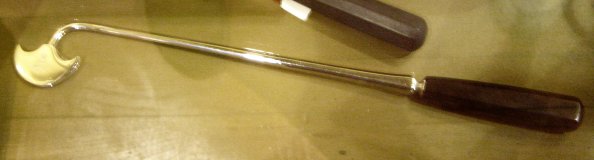
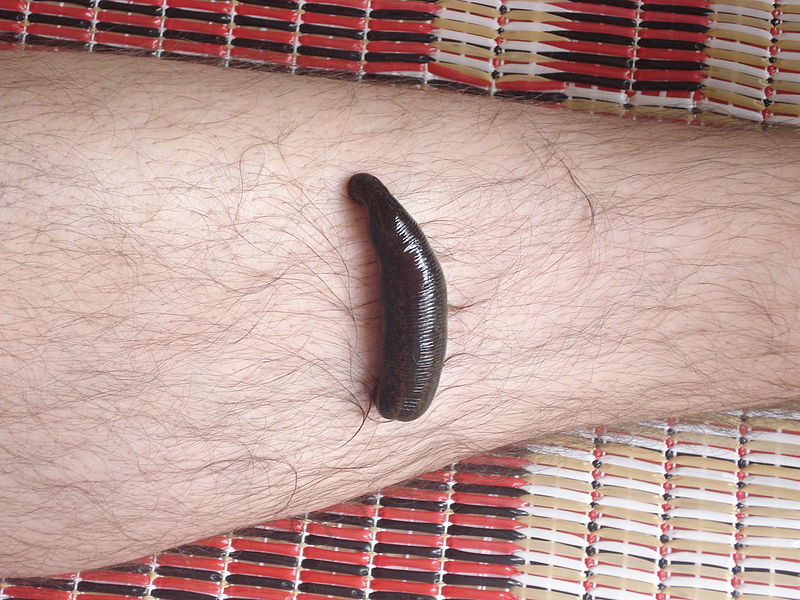
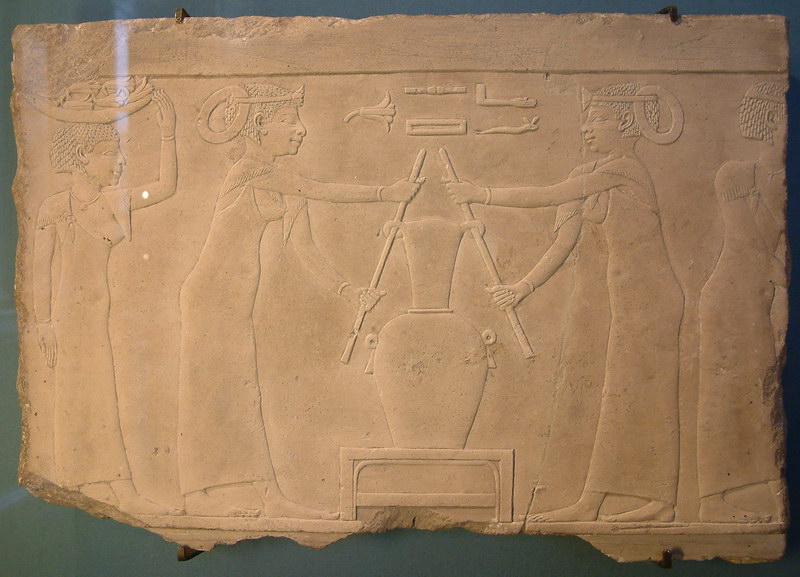
Contemporary audiences may wince at the idea of using leeches in a hospital or other medical facility, but the truth is that it actually exists as a highly effective means of bloodletting even with today’s newfangled contraptions at the ready. Leeching, or the process by which a patient’s blood is sucked out by the titular eager annelids, helps to prevent clotting during and after surgery and was once believed to cure a number of different ailments. The first recorded mention of the process was discovered on an Egyptian tomb dating back to 1500 B.C.E. , and it remained in fashion for more than a millennium until doctors and scientists in the early 20th Century dismissed it as largely hogwash. However, leeching experienced resurgence in the 1970’s and remains an entirely valid method of removing blood pools that cause painful swelling even today. In fact, many hospitals make sure to keep a few on hand at all times in the event a doctor or surgeon needs their parasitic assistance.
6. Maggot Therapy
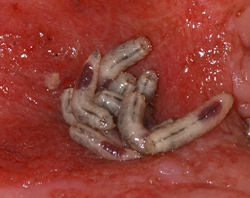
Like leeches, the very nature of fly larvae has been harnessed in order to treat different medical ailments in humans as well. Although generally associated with treatment on the battlefield, the real history of maggot therapy actually roots itself in more distant times. The Aborigines and the Mayans both took advantage of the insects’ taste for decaying flesh as a means of cleaning wounds that had become infected and pulsating with pus and/or gangrene. The process later became exceedingly popular in both mainstream and military medicine, especially considering the fact that the droves of maggots munching away carries with it an antibacterial effect that also helps stave off infections. Doctors in contemporary times continue to utilize maggots in various treatments where dying tissues require immediate removal. Patients claim that the experience, when it can actually be felt, tickles and itches a bit – rarely, if ever, does any pain factor into the equation. After all, the plucky little bugs can tell the difference between delicious decay and the foul stench of living flesh.
7. Caesarean Sections
Ancient and medieval Islamic physicians alone have greatly impacted modern medical practices far more than mainstream society realizes, and many of their scientific and mathematical applications and discoveries remain completely relevant today. If Hippocrates is considered the “Father of Medicine,” then Abu al-Qasim al-Zahwari (936-1013 C.E.) ought to be the “Father of Surgery.” His Kitab al-Tasrif, one of the most influential medical texts ever penned, set the standard for 500 years’ worth of European medical history. Among other accomplishments, including inventing nearly 200 different surgical tools, al-Zahwari is sometimes attributed with performing the first caesarean section – a means of delivering a baby by slicing open a mother’s abdomen rather than through the birth canal. This is, however, somewhat anecdotal, although references to caesarean sections performed on dying women have cropped up in ancient Chinese and Roman writings. The real history of the procedure comes off as uncertain and spotty, though there is reason to believe that it has some basis in ancient and medieval medical practices.
8. Hydrotherapy
Doctors today continue to use water as a conduit for soothing pain and strain, especially in the muscles, but hydrotherapy has actually been utilized by the ancient Egyptians, Greeks, Romans, Chinese, and Japanese – among other civilizations. Many ancient medical texts discuss the various applications that both drinking and soaking in heated or cooled water provide for various ailments, and some cultures incorporated aromatherapy into the equation. The Romans, of course, garnered quite a bit of fame for their public bath houses meant as both a social and therapeutic meeting place – the precursors to today’s health spas. Water still plays an integral role in 21st Century medical treatments, continuing to act as an external painkiller, exercise medium for those in need of physical therapy, cleanser for the bowels and other organs, and many other extremely valuable applications. Spas frequently take a cue from the ancient societies who blended hydrotherapy with aromatherapy to help their patrons unwind – a move which also has helps stimulate mental health as well.
9. Cosmetics
Though associated with makeup and inessential surgical procedures today, cosmetics actually have a pretty solid foundation in maintaining health and wellness. Shaving, which actually dates back to prehistoric times, rids the body of hairs that can trap sweat and provide a veritable Shangri-la for bacteria and mites. Wealthy citizens of ancient cultures, likely beginning with the Egyptians, slathered themselves in perfume in order to mask their natural body odor – a sensibility that later inspired Abu al-Qasim al-Zahwari to invent solid deodorants in addition to hair removal sticks, mouthwashes and poultices made of coriander, cardamom, cinnamon, and/or nutmeg, and even lotions, aromatic rubs, and nasal sprays. All of these still persist in today’s lifestyles, frequently incorporating new developments (such as antiperspirants accompanying deodorants) along the way without actually changing their original intent. Al-Zahwari’s suggestions for freshening breath remain extremely popular in many nations today, and the ingredients found in his pain-relieving creams – like camphor, for example – still play integral roles in products such as Vick’s VapoRub and Tiger Balm.
10. Massage
The use of massage as a means of relaxing muscles and relieving tension for better physical and mental health dates almost as far back as human history itself. Nearly every civilization sported its own particular brand of therapeutic touch, which some speculate originates in shamanic healing and empowerment rituals. The ancient Babylonians, Egyptians, Chinese, and Indians all boasted their own massage rituals. It crops up in medical texts by Greek physicians Hippocrates and Galen and subsequently found its way into Roman culture as a result. Along the way, some began incorporating elements such as perfumes, lotions, oils, hot rocks, and other accessories into massages as well, resulting in an experience as sensual as it is beneficial. There is so much information available on massage’s myriad uses – from physical therapy to simple relaxation – that anyone considering some form or another will likely find one suitable for his or her needs. Be sure to consult with a doctor or nurse beforehand, however, as some massage rituals may not necessarily work to alleviate certain conditions.
The brilliant minds of ancient physicians and surgeons still resonate into today – a testament to their ability to transcend time without having to strive for physical immortality. Without their contributions to their own eras as well as the current one, humanity would crumble and fade entirely as its members drop off one by one from various blights. Even those whose findings ended up obsolete as research and development evolved still played an entirely valuable role in keeping the species alive and deserve the gratitude of later generations.
Ashley M. Jones writes regularly on the subject of pharmacy technician certification. She invites your questions, comments at her email address: ashleym.jones643@gmail.com.
.
Monday, June 14, 2010
The Coming Oversupply of Doctors in Malaysia
At the rate we are going, newly graduated doctors may be selling insurance or be pharmaceutic sales representatives soon. Good luck to them all!
MMA: What sort of doctors are we producing?Susan Loone
Malaysiakini; Jun 14, 2010
12:15pmThe Malaysian Medical Association (MMA) expressed concern that the hundreds of house officers (or housemen) who throng major urban hospitals share the same patients and duties.“What is worse, they have lesser personal time with their trainers, registrars, clinical specialists and consultants,” said MMA president Dr David Quek, when contacted yesterday.“What sort of doctors would we be producing? This is particularly worrisome, and it would be extremely difficult to train them all well when the glut seems to overflow the system.”
Dr Quek was responding to DAP national vice-chairperson M Kula Segaran (left), who had noted on Saturday that 24 medical colleges for a population of 27 million could be a major contributing factor for the projected oversupply of doctors in the next five years.The Malaysian Medical Council's latest annual report states that the number of doctors (including 3,651 house officers) has hit 27,709.According to the report, which the MMA cited, Malaysia is expected to produce 3,500- 5,000 medical graduates annually.Based on an annual growth rate of 2.5 percent, the country may have 45,000-50,000 doctors for a population of about 32 million to 35 million people.If the over-supply continues, there could be a staggering 75,000-80,000 doctors by 2020.Worry over 'diploma mills'Dr Quek (right) said Malaysia should not emulate countries such as the Philippines, which are exporting trained doctors as re-trained allied health paramedics, as this is a huge waste of money and resources.
He drew a comparison with the legal profession which had around 10,000 registered lawyers about 10 years ago; this year the figure is a mere 14,000.“Why are we mass-producing doctors with no end in sight, and undermining our hitherto much-vaunted profession?” he queried.“Our diploma mills unfortunately might then begin to shortchange our uninformed citizens and parents, who relentlessly continue to push their children to enter such a profession, which cannot guarantee their employability at such enormous costs and borrowing.”Dr Quek, however, noted that Health Minister Liow Tiong Lai is mulling the possibility of imposing a moratorium on private medical colleges following MMA's concerns about a possible glut in poorly trained doctors within the next decade.Two weeks ago, at the MMA's 50th annual general meeting, Liow said a moratorium is necessary to allow the government to produce quality doctors.He said there are currently 31,273 registered doctors nationwide with the government focusing on achieving a ratio of 1:600 by 2015.
.